Showing posts with label local. Show all posts

Monday, September 20, 2010

Lazy Lady Farm


The Special
This week we are pleased to feature goat cheese from Lazy Lady Farm of Westfield, Vermont. All this week, Chef Casey Graham will use organic Lazy Lady Farm products in main dishes, appetizers, soups, and salads. Be sure to ask your server about tonight’s Lazy Lady Farm Special!

The Farm
Lazy Lady Farm is an off-the-grid, organic farm located in the town of Westfield in the Northeast Kingdom of Vermont. Owner Laini Fondiller milks 40 registered Alpines goats and produces over 21 varieties of goat and cow cheese, raises pork with whey from the cheese plant, and produces grass fed beef raised in her farm’s lush pastures. Lazy Lady Farm products can be found in locally and nationally in farm stands, natural and gourmet food stores, and fine restaurants.
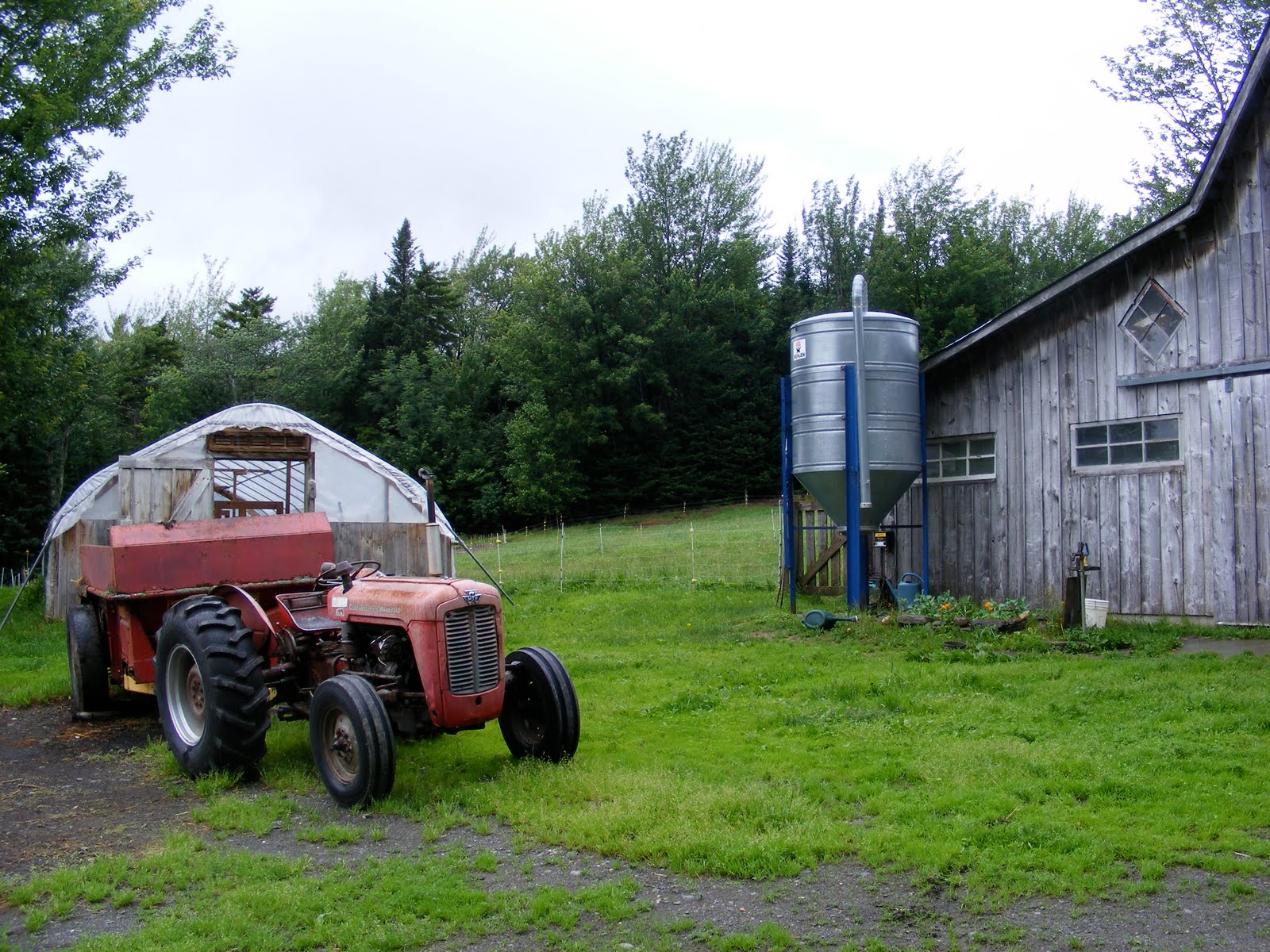
Lazy Lady Farm

Like the state of Vermont, Lazy Lady Farm of Westfield was “green” before “green” was cool. In the late 1980s when owner Laini Fondiller started her small, organic off-the-grid farm, this meant using candles, gas lamps, hand water pumps, an outdoor privy and a car battery for running a radio. Today, Laini and an apprentice milk a herd of 40 goats and raise whey-fed pork and grass-fed beef using power from 17 solar panels and a one kilowatt wind generator. Laini's approach to farming has nothing to do with trendiness and everything to do with environmental sustainability and an appreciation for quality food. “I make natural food because that’s what I like to eat!” she says. “I don’t want any chemicals in it.”


Lazy Lady Farm, Laini's small, successful cheese plant and meat farm in northern Vermont, has been many years in the making. After graduating from college in southern Indiana, Laini moved to Vermont during the “Back to the Land” movement of young people from urban to rural areas that was a hallmark of the 1970s. She spent some time working for Butterworks Farm in Westfield, another one of Juniper’s Restaurant’s featured farms, where she learned to work with cow milk. In the early 1980s Laini visited Corsica, France where she spent two years learning to make French style goat and sheep cheese. When she returned to Vermont, Laini began making goat cheese in her kitchen to sell at local farmers’ markets and in gourmet food shops in Stowe and Montpelier. Her first licensed cheese plant, a 10 by 12 foot room where she made cheese in five gallon batches, was finished in 1995, and her first geothermal cheese aging cellar was built in 1996. In 2003 a loan from the VT Community Fund allowed Laini to build a cheese plant capable of housing a 50 gallon cheese vat, and this year Laini completed a second cheese ripening cellar.


Lazy Lady Farm currently offers 21 varieties of cheese made with both goat and cow milk. Laini enjoys creating so many kinds of cheese for a number of reasons, number one being her own enjoyment of the flavors that goat cheese is capable of. “I have such fond memories of the cheeses I enjoyed in France,” she says. Political humor is another aspect to her productivity. “An underlying pulse to some of the cheeses is my addiction to politics and political figures,” she says. “I can’t resist creating a cheese to fit a politician or a political topic.” Examples of cheese with names that are politically inspired: BiPartisan is a combination goat and cow cheese, Barick Obama is a square goat cheese, and Tomme Delay is a French style tomme cheese. Another influence is “the environmental factors of the farm, cheese room and cellar,” she says. “Certain cheeses can only be made at certain times of the year, where it is enhanced and made possible by the external conditions.” Laini stops milking her goats in November and only offers cow cheese, made with milk from Butterworks Farm, during the winter months.


Laini is very proud of her herd of 40 registered Alpine goats. “I like goats,” she says. “They have good personalities. They’re not dopes. Well, they are, but they’re not too bad.” The herd is meticulously managed in order to produce high quality cheeses. They are pastured in the summer, May through October, using intensive rotational grazing, and in the winter they are fed on hay produced on the farm and on grain from Green Mountain Feeds in Bethel, Vermont. The goats are also given plenty of minerals to keep them healthy, vital, and productive.


Lazy Lady Farm currently produces around 12,000 pounds of cheese per year that is sold to gourmet food stores and fine restaurants as far as New York City and Chicago. Laini’s cheeses are the recipients of multiple national cheese awards and her farm has been featured in the food section of the New York Times. Beyond being part of the local foods movement, Laini sees Lazy Lady as part of a growing national appreciation of better-tasting food. “Local foods have gotten so good, now it’s just associated with being good versus being local,” she says. Laini enjoys eating her own cheese, and takes a simple approach to its use in her meals. Contrary to her farm’s name, Laini doesn’t have time to be lazy, and accordingly she says, “I don’t cook. I just like a big blob of cheese on a cracker or a piece of bread.”

Lazy Lady Farm
973 Snyderbrook Road
Westfield, VT 05874
802-744-6365
www.lazyladyfarm.net
www.vtcheese.com/members/lazylady/lazylady.htm

Sunday, August 29, 2010

Shuttleworth Farm

The Special
This week we are pleased to feature country style ribs, bacon, and lamb from Shuttleworth Farm of Westfield, Vermont. All this week, Chef Casey Graham will use naturally-raised Shuttleworth Farm meats in main dishes, appetizers, soups, and salads.

The Farm

Shuttleworth Farm is a family owned and operated farm located in the town of Westfield in the Northeast Kingdom of Vermont. Their sheep, pigs, and poultry are raised on the lush pastures that grow in the shadow of Jay Peak and lie along the banks of the Missisquoi River. Most of the meat from Shuttleworth Farm is sold within two hundred miles of the farm to individual customers as well as fine restaurants and natural food stores.


Shuttleworth Farm

In the green meadows of Westfield at the foot of Jay Peak, a flock of Shuttleworth Farm sheep graze contentedly as clouds engulf the moutain above. The flock is guarded by three border collies and two Great Pyrenées who keep the lambs and ewes from straying too near the banks of the Missiquoi River. This graceful valley is home to Kelli Fogg and Todd Shuttleworth and their daughter Isla, along with a few other small farms and country homes. Shuttleworth Farm is one of the biggest lamb producers in the state of Vermont and part of the growing local foods movement. Most of their lamb, pork, and poultry products are sold within two hundred miles of their property.

I am visiting Kelli and Todd at their farm on a cool morning in June. Isla, their sixteen month old, shows me around the barn, fearlessly toddling up to the dogs and sheep. Like her parents, she seems a born farmer. Todd Shuttleworth has loved family farming since spending his childhood summers on the original Shuttleworth Farm in Canaan, New Hampshire, where his grandparents raised dairy cows and vegetables. “A little bit of nostalgia helps you get involved. It can also help you keep going,” he says.

Todd studied farming at the University of Maryland. After graduation, he moved to the Northeast Kingdom to try his hand at running the family farm. It was in Vermont in 2003 that Todd met Kelli, his real estate agent and a former marketing major at Alfred University. Their shared passion for family farming and naturally raised foods led them to purchase a small flock of sheep and the former dairy farm in Westfield. This new generation of Shuttleworth Farm is a wonderful example of how a combination of responsible farming practices, favorable market trends and modern advertising strategies can support and sustain a small family farm. The Shuttleworths currently have 150-250 ewes, produce up to three hundred lambs a year, and have nine sows.

Nostalgic it may be, but this old-fashioned, low-tech approach to farming in many ways works better and is cheaper, healthier, and more environmentally sustainable than industrialized agriculture. The Shuttleworths have successfully adopted many traditional practices on their farm. They keep their pigs in the Swedish manner, with lots of clean deep straw for bedding and a separate area for their manure. “Pigs are very clean animals, if you give them the choice to be,” Todd observes. His work with the dogs is both nostalgic and effective. “I like to joke that the dogs saved our marriage.” He smiles. “Before we got them it would take us hours to round the sheep up.”

The Shuttleworths are excited about the local food movement and the surge of interest in organic and naturally produced food, though they are realistic about its challenges. “It’s tough. It’s tough for us to get the attention of lawmakers. The dairy industry gets plenty of low interest loans and subsidies,“ Todd says. “Getting a bank to believe in you and your business plan, that’s tough. But I think that as the movement grows, and more people are successful, it’ll get better.”

Another challenge lies in educating consumers about the cost of producing healthy food versus the cost of producing cheap food. Though local and natural foods will often be more expensive, consumers should consider that they are also purchasing reassuring knowledge of where their food is coming from and how it is produced. The cost of producing of cheap foods is more hidden, funded by government subsidies and, ultimately, taxpayers. “I think that consumers can provide some of the most powerful oversight, environmentally and otherwise,” says Todd. “When you have to live in the community where you sell your food, if you were raising a poor product you’d have a bad reputation quick. But when your food comes from God knows where, it’s like this invisible curtain that everything is hidden behind. There’s no real accountability, there’s no liability.”

The purchase of Shuttleworth Farm meats and other locally produced natural foods contributes not only to the growth of strong communities and a safer food system, but also to a healthier environment. “You don’t want to create problems,” Todd says. “We accept responsibility for all of the food we’re producing, everything. All that grain for the animals, all the manure from the animals, that gets handled responsibly.” Their sheep are mostly grass fed, which reduces the use of the fossil fuels it takes to grow and ship grain, and Todd believes the meat is the better for it. “Keeping those animals healthy, and they grow quick on a low or no grain diet, produces a leaner meat, so it’s not greasy,” he says. “You don’t need the mint sauce. It’s very tender.”
.
So of course, one of Todd’s favorite things about sheep farming is the opportunity for quality control. “I love it when a package breaks open and we have to eat it ourselves,” he grins. “I like everything grilled.” Kelli prefers roasting; she says that one of the family’s favorite meals is a boneless rolled lamb shoulder with Montreal steak seasoning, slow roasted in the oven.

The Shuttleworths have a wonderful website and farm blog at www.shuttleworthfarm.com. You can visit their website for information on ordering their products and to learn more about the family and their farming philosophy.


Shuttleworth Farm Mission Statement

People speak about sustainable agriculture as an ideal goal, but at Shuttleworth Farm, we think that sustainability is the least we can do. We are not about maintaining, we are about improving:

* Improving our soils with carefully planned rotations of sheep, laying hens, broilers, turkeys, pigs and hay that perfectly complement the natural growth cycle of our native cool season perennial grasses.
* Improving the health of our animals. Fresh air, sunshine, clean water, and lush green grass benefit all types of livestock, yet so much of modern agriculture denies animals these basic necessities. We let our animals eat and behave as nature intended them to.
* Improving the health of our consumers. Pasture-raised meats are much lower in fat, higher in heart healthy Omega-3 fatty acids and Conjugated Linoleic Acids (CLA's), and excellent sources of Vitamins A, B3, B6, B12, D and E (Jo Robinson, Eat Wild, 2006)
* Improving the health of our community. The average morsel of food in this country travels more than fifteen-hundred miles before it is consumed. (Pollan, Michael. The Omnivore's Dilemma. New York: The Penguin Press, 2006. 239p). We service our local markets. The vast majority of our meats are consumed within two hundred miles of our farm. This permits us to offer quicker time to market, reduced handling charges and huge reduction of the use of fossil fuels.

Sunday, July 25, 2010

Mountain Foot Farm


The Special
This week we are pleased to feature organically grown kohlrabi, French filet beans, lettuce, zucchini, summer squash and brown trout from Mountain Foot Farm of South Wheelock, Vermont. All this week, Chef Casey Graham will use Mountain Foot Farm products in main dishes, appetizers, soups, and salads. Be sure to ask your server about tonight’s Farm to Table Special!

The Farm
Mountain Foot Farm is an organic farm in South Wheelock, located just outside of Lyndonville in Vermont’s Northeast Kingdom. They have a CSA (Community Supported Agriculture), providing weekly shares of vegetables to around 10 local members and they attend weekly farmer’s markets in St. Johnsbury (Saturdays from 9am-1pm), and Danville (9am-1pm). They also provide produce to several local fine restaurants.

www.mtnfootfarm.net

Mountain Foot Farm

Do you know the Vermont Recycling Motto?

Use it up,
Wear it out,
Make do,
Or do without.

Curtis Sjolander of Mountain Foot Farm is familiar with the motto, and he credits much of his success as a small trout, vegetable and flower farmer in Vermont’s Northeast Kingdom to its principles of thrift and ingenuity. “I drive old cars,” he says, “and I have a small mortgage.” He plans to expand his brown trout production into three new tanks this year, which he will construct out of an old grain silo he was given. “Creative Answers to Interesting Questions” might be a good motto for Mountain Foot Farm.

Curt was born in Massachusetts but has lived in Vermont for most of his life. His parents moved to St. Johnsbury where they still live, and he attended high school at St. Johnsbury Academy. Curt obtained his degree in computer science in Troy, New York, where he met his wife Joan, who is a nurse. They built their house on South Wheelock Road in 1984 and began to make a real go at farming in 1989. They have been regulars at the Caledonia Farmer’s Markets in St. Johnsbury and Danville for over twenty years. During the few months of the year when there is not much to do on the farm besides feeding and processing the trout, Curt works part time as a freelance software engineer.

The Sjolanders own a total of about 30 acres of land in two parcels. One parcel in the town of Wheelock, about 10 acres, contains their home, attached greenhouse, barn with trout rearing tanks, maple sugarbush and woodlot. The other parcel, about 20 acres in the town of Lyndon, has the main gardens, hoop houses, storage sheds, pasture, softwoods and undeveloped land. A third parcel is on Curt’s parents' land in St. Johnsbury where there are garden plots.


Why trout farming? When they bought the property and built their house at the foot of Ide, Wheelock, and Stannard Mountains, the Sjolanders discovered that the land had a particularly good spring that produced more water than was needed by the house alone, and they could think of no better way to use the excess cold, clean water than to install gravity fed trout tanks. Why vegetables? Curt has learned that diversifying his production is a good safeguard against the inevitable small and large disasters that farmers face every season (lost crops, personal or financial difficulties, etc.), and he also likes to keep life interesting by learning to raise new, unusual crops. Why farming at all, for a person who could make a steady living as a freelance software engineer? “I like to be out and about,” Curt says simply. “Who wants to sit at a computer all of the time?”

While not certified organic, Mountain Foot Farm does follow organic principles. Curtis practices long distance rotation of crops on his three parcels of land, which keeps pest populations under control by interrupting their generational life cycles. Another organic practice: cats, a perfectly natural and effective method of pest control. Throughout the interview, barn cats wind around our legs and keep watch for rodents. Mountain Foot Farm's fish are kept healthy without the use of medications, which Curt achieves by keeping a low density of fish in each tank and feeding them only once a day to promote slow growth and optimal health. The trout thrive in gravity-fed tanks filled with fresh spring water, which ranges in temperature from 46-52 degrees Farenheit. They are around 10–12 inches long and about 3-4 years old when they are sold.


Last year, which was one of his best for the trout business, Curt sold between three and four thousand trout to local restaurants and still was not able to keep up with demand. Curt has watched interest in local foods increase during his years at the Caledonia farmers’ markets, and in particular there are more requests than ever from local chefs for his fish. Unfortunately, this year has not been a good one for his trout because of heavy mink predation on their tanks this winter. His tanks normally produce 200 fish a week, but this summer Curt has only 200 total fish to ration to his customers over the next few months. This is the type of annual farming disaster that is predictably unpredictable, and a good example of why the Sjolanders are so diversified in their farming.

One of the unusual vegetables that Curtis raises is kohlrabi, a leafy vegetable in the cabbage and broccoli family. He recites for me the regular spiel he gives to his farmer’s market customers on how to prepare it: “There are three ways you can do it. Peel it, cube it up or slice it up thin, and boil it. Or you can thin slice and stir-fry. Your other option is to thin slice it and eat it raw in a salad.” The trout his eats is prepared simply. Most days Joan breads the fish and throws into the frying pan, but on special occasions she likes to bread it lightly, stuff the cavity with herbs, sprinkle it with a bit of white wine, and bake it in the oven. At Mountain Foot Farm, a delicious answer to a tasty question.